Goat Breeding Tips for Livestock Farmers (Urdu)

In order to get maximum meat and milk Beetal, Daira Deen Panah, Nachi, and Teddy Breeds.....

Mango Amazing Facts

The mango is known as the 'king of fruit' throughout the world. The name 'mango' is derived from the Tamil word 'mangkay' or 'man-gay'. When the Portuguese traders settled in Western India they adopted the name as 'manga'.

Pomegranate(Punica granatum) Cultivation and Farming

Pomegranates are fairly drought tolerant and can be grown on either calcareous or acid soils. Climate - Grow best in dry climates with mild winters. Chilling requirement

EU may also ban Monsanto GMO in wake of shocking cancer findings

Russia's consumer protection group, Rospotrebnadzor, said it was halting all imports of GM corn while the country's Institute of Nutrition will be evaluating the results of the study.

Protect Garden Pots during Winter

Many pots, especially ornamental containers that aren’t designed to stand outside in freezing temperatures, need winter protection. Wrap them up in burlap (possibly double layers), and secure tightly at the top and bottom with strong garden string.

Sustainable Agriculture and Fertilizers Practices in Pakistan

Agriculture is the mainstay of Pakistan’s economy. It has a total area of 79.61 million hectare, and the total area used for crop production is only 22 million ha.

Herbs For Winter Windowsill

Growing season is over, do you still find yourself ready to dash out to the garden for some chives, basil or a sprig of thyme...

Claim FREE EBook

Once you subscribe you will get a confirmation email from agrinfobank about joining the mailing list.

Showing posts with label Herbs. Show all posts

Thursday, 27 December 2012

Healthy herbs nutrition facts

Healthy herbs have long held an important place in our wellness. Prized since ancient times, and today we even more depend on them to purify our body, mind, and soul!
healthy herbs
Of course, we all use herbal parts in our daily lives, one way or the other, whether for their fragrance, for their healing power, or in lovely recipes.
Herbal benefits are many; be it for spiritual reasons or to spice up your taste buds, or as a home remedy for your sore throat... herbs are handy for every need! Although, the herbs been in use in our diet since antiquity, only recently have taken the center-stage of nutrition scientific world for their potential health benefiting and detoxification properties.


aloe-vera plant

Why herbs in our diet...? Health benefits of herbs
  • mediterranian basilHerbs contain unique anti-oxidants, essential oils, vitamins, phyto-sterols and many other plants derived nutrient substances, which help equip our body to fight against germs, toxins and to boost immunity level. Herbs are, in fact, medicines in smaller dosages.
  • Essential oils in herbs have been found to have anti-inflammatory function by inhibiting the enzyme cyclooxygenase(COX), which mediates inflammatory cascade reactions in the body. The enzyme-inhibiting effect of essential oils in herbs makes it an important remedy for symptomatic relief in individuals with inflammatory health problems such as rheumatoid arthritis, osteo-arthritis and inflammatory bowel conditions like ulcerative colitis.
  • Many unique compounds in the herbs have been found to reduce blood sugar levels in diabetics.
  • Controlled-epidemiological studies have shown that certain compounds in garlic like those that thiosulfinates (allicin) can bring significant reduction in total cholesterol and in blood pressure and thereby helps prevent coronary artery disease and stroke risk.
  • Curcumin, together with other antioxidants in the turmeric, has been found to have anti-amyloid and anti-inflammatory properties. Thus, it is thought to be effective in preventing or at-least delaying the onset of Alzheimer’s disease.
  • The volatile oils, vitamins, and antioxidants in the herbs have cytotoxicity action against prostate, pancreatic, colon, endometrial etc., cancer cells.
  • The chemical compounds in the herbs have been found to be anti-spasmodic, carminative, diaphoretic, analgesic, aphrodisiac, deodorant, digestive, antiseptic, lipolytic (fat and weight loss action), stimulant and stomachic actions when taken in appropriate dosage.

Here is the complete list of healthy herbs with their
health benefits, nutrition value, culinary and medicinal uses:

basil
Basil herb
borage
Borage
burdock root
Burdock root
celery
Celery
chives
Chives
cilantro
Cilantro (coriander)
dandelion
Dandelion
dill
Dill weed
epazote
Epazote
garlic
Garlic
ginger
Ginger
lemongrass

Lemongrass
oregano herb
Oregano
parsley
Parsley
peppermint
Peppermint
rosemary
Rosemary herb
garden sage or common sage
Sage
summer savory
Savory
spearmint-herb
Spearmint
stevia rebaudiana plant
Stevia
sweet-marjoram
Sweet marjoram
tarragon
Tarragon
thyme
Thyme herb
turmeric
Turmeric

Culinary herbs

Herbs are a great addition to food, not just because, they add special flavor and spicy taste to our food, but also they contain many anti-microbial substances that help keep our food protected from these agents. Healthy herbs are used in small amounts while preparing recipes; actually, they provide flavor rather than substance to food.

Here are some serving tips:
  • Fresh leaves are being used in the preparation of soups and herbal sauces.
  • Chopped, fresh herb leaves can impart richness to vegetable as well as fruit salads.
  • Along with other spicy items, selective healthy herbs are being used to enhance the flavor and taste of vegetable, chicken, fish and lean meat dishes.
  • Some herbal leaves and plant parts are increasingly been used as popular flavor drinks.

Saturday, 15 December 2012

Herbs for the winter windowsill

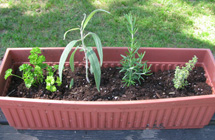
Now that the growing season is over, do you still find yourself ready to dash out to the garden for some chives, basil or a sprig of thyme, only to lament their loss to the cold weather? Why not start a small collection of culinary herbs indoors, where their flavor and fragrance will delight you through the upcoming winter months?
Growing herbs indoors is not difficult, as long as their few cultural requirements are met. The two most important factors for the successful growth of herbs indoors are light and moisture. The majority of popular culinary herbs require at least six hours of direct sun each day. A southerly-facing window is best, although a southwest or western exposure will do. Another alternative is to grow them under artificial light. A fluorescent fixture with one cool white bulb and one warm white bulb kept on for at least 12 hours a day will suffice. Specially-formulated, full-spectrum lights have come down in price and would actually be a better choice. Plants placed on window sills should be given a quarter turn daily, so they won’t lean to the light. If it gets really cold at night, move tender plants such as basil away from the windowsill.
Proper watering often makes the difference between life and death for herb plants. In general, the majority of herbs like to be kept on the dry side, but as many potential herb growers have found out the hard way, allowing the potting mixture to totally dry out will be the demise of their plants. Likewise, excessively wet soils promote root-rotting diseases. All pots should have drainage holes. Water when the soil about a half inch below the surface feels dry to the touch and continue watering until the excess water begins to run out the bottom drainage hole. Then let the pot drain thoroughly before putting it back on its saucer.
I have had excellent results growing herbs with a mix of a quarter each potting soil, clean, coarse sand, peat moss, and either vermiculite or perlite. I add about one tablespoon of ground limestone for each gallon of potting mix and one-quarter cup of Osmocote Plus Trace Elements, as I get lazy about fertilizing. If you prefer, plants can be fertilized once a month with a half-strength liquid fertilizer. Fish emulsion or liquid kelp works good for organic growers. Clay pots are favored, as they are more porous than plastic ones.
Basil, summer savory and parsley can be started from seed if you prefer. The first two herbs germinate quite readily, but parsley seeds are rather stubborn, requiring about three weeks before sprouting. Regular sweet basil tends to become a rather leggy houseplant. Instead, opt for the compact, globe-shaped bush basil. Unlike most herbs, basil wants a warm location.
Oregano is a member of the mint family and can even be grown in hanging baskets. It prefers to be kept at about 60 degrees F and growth will slow drastically if temperatures fall below 50 degrees F. Avoid overwatering oregano and note that it is prone to root rots.
Rosemary is an exceptional complement to meat dishes, potatoes and breads. Although it does prefer to be kept on the dry side, if the soil dries out completely – even for a short period of time – your plant will die. Both white and blue flowering varieties are available. Rosemary can also be trained as a standard or wreath.
More than 400 thyme varieties are recognized. The ones I found most suited to indoor culture are varieties of Thymus vulgaris. Lemon-scented and caraway thyme also make good houseplants.
Bay is a slow grower, preferring an almost neutral soil. Harvest the older leaves as needed and always be on the lookout for scale insects.


By Dawn Pettinelli - UConn Home & Garden Education CenterPerk up your menu by adding a few herb plants to your home. If you have questions about growing herbs or other gardening quandaries, call, toll-free, 877-486-6271, visit www.ladybug.uconn.edu, or contact your local Cooperative Extension Center

About us