Goat Breeding Tips for Livestock Farmers (Urdu)

In order to get maximum meat and milk Beetal, Daira Deen Panah, Nachi, and Teddy Breeds.....

Mango Amazing Facts

The mango is known as the 'king of fruit' throughout the world. The name 'mango' is derived from the Tamil word 'mangkay' or 'man-gay'. When the Portuguese traders settled in Western India they adopted the name as 'manga'.

Pomegranate(Punica granatum) Cultivation and Farming

Pomegranates are fairly drought tolerant and can be grown on either calcareous or acid soils. Climate - Grow best in dry climates with mild winters. Chilling requirement

EU may also ban Monsanto GMO in wake of shocking cancer findings

Russia's consumer protection group, Rospotrebnadzor, said it was halting all imports of GM corn while the country's Institute of Nutrition will be evaluating the results of the study.

Protect Garden Pots during Winter

Many pots, especially ornamental containers that aren’t designed to stand outside in freezing temperatures, need winter protection. Wrap them up in burlap (possibly double layers), and secure tightly at the top and bottom with strong garden string.

Sustainable Agriculture and Fertilizers Practices in Pakistan

Agriculture is the mainstay of Pakistan’s economy. It has a total area of 79.61 million hectare, and the total area used for crop production is only 22 million ha.

Herbs For Winter Windowsill

Growing season is over, do you still find yourself ready to dash out to the garden for some chives, basil or a sprig of thyme...

Claim FREE EBook

Once you subscribe you will get a confirmation email from agrinfobank about joining the mailing list.

Showing posts with label Pest. Show all posts

Thursday, 13 December 2012

NATURAL BORN PEST KILLERS


NATURAL BORN PEST KILLERS
Home Remedies for Natural Pest Control
By Eric Vinje, Planet Natural
Not everybody likes cucumbers. You may be interested to learn that ants hate cucumbers, especially cucumber peels. You'll especially appreciate that fact if you want to get rid of them. Just spread some cucumber peels - the more bitter, the better - where ants enter your home and they should get the message. Consider cucumber the "anti-welcome" mat for ants.

Cucumbers are one example of natural pest control. It's using natural and generally non-toxic ingredients to repel or get rid of pests including ants, wasps, mites, moths, flies and other insects.

People are slicing up cucumbers instead of spraying Bug-Be-Gone because they don't want toxic chemicals in their homes or in their garden sheds. There is growing evidence that synthetic pesticides pose a health risk to humans and animals.

Here at Planet Natural, we have a whole slew of natural pest controls, including Orange Guard ($8.95) which uses d-limonene, or orange peel extract, to control insect pests; Safer BioNeem ($12.95), which uses the active ingredient of neem oil - azadirachtin - to kill insects before they become biting or reproducing adults; as well as a variety of traps including the Disposable Yellow Jacket Trap ($4.95) and Apple Maggot Trap ($15.95).

For those willing to invest some time and effort at crafting their own remedies, we've gone on to list a variety of remedies to help you battle pests on the home front and in your garden.

Barriers act like barbed wire to keep crawling pests, such as ants, out. These include garlic - grind it up with water and apply - cayenne pepper, cinnamon, powdered charcoal, bone meal, talcum powder or chalk. Keep in mind that different pests have different aversions, so you'll have to see what substance works best with the ones trying to sneak into your home.

Another way to think of barriers is to grow certain plants around the periphery of your home. They not only look nice, but will also deter pests. Plants known to repel ants and aphids include: spearmint, peppermint and pennyroyal.

You can use the same trick for fly control. Just substitute the above plants with mint and basil which repel flies, but smell good to humans.

Boiling water is excellent for ant control or if you see where they are creeping into your house, squeeze some lemon into the hole or crack.

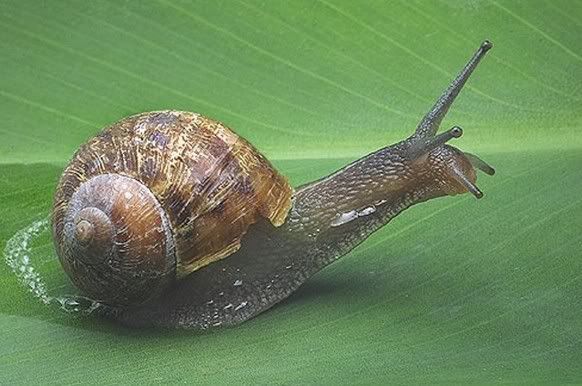
Barriers also work for snails. They dislike sand, lime, copper or ashes, so use these borders to keep snails away.

Baking soda and powdered sugar mixed in equal parts is a good roach killer. Just spread around the area where you see roaches and soon you won't see them anymore. (Boric Acid, while slightly more toxic, is naturally occurring and is another way to get rid of them.)

Here's a really sneaky way to get rid of fire ants. (All's fair in love and the war against insect pests.) The only way to get rid of an infestation is to assassinate the queen. Wait until a dry spell is about to end. Sprinkle instant grits on the fire ant hill. The workers will carry the grits to the queen for her royal meal. She'll eat the grits and when it rains, she'll drink. And that's what will kill her. The grits will expand in her stomach and she'll "bloat" to death. Once she's out of the way, the leaderless ants will die off. (This suggestion came courtesy of the Tightwad Gazette II book.)

Cloves smell better than moth balls and are a natural deterrent against winged pests. You can also create a water trap by filling a small basin with water and leaving a night light suspended over it. Moths will be attracted to the light and will end up crashing and burning and falling into the water. Add a little dish soap to break the surface tension of the water.

Corn Gluten Meal may not sound very appetizing, but it's a natural, preemptive strike against weeds. Apply it early in the spring before weeds sprout. Corn gluten meal is a byproduct of the corn milling process and is a natural fertilizer.

Diatomaceous earth is made up of the fossilized remains of diatoms, single-cell organisms. The glass-like nature of diatomaceous earth makes it one of the oldest forms of insecticide. The sharp surfaces cut through the insect cuticle and the insect dies of dehydration. Diatomaceous earth kills earwigs, ants and box elder bugs. Since it's non-discriminate when it kills, be sure to only apply it just to the ground surface where you think insects are overstaying their welcome.

Grind rosemary leaves into a fine dust and sprinkle it onto your pet or its bedding to ward off fleas.

Ivory liquid dishwashing detergent can act as a natural insecticide. Dilute with water until it is a 1 or 2 percent solution and then spray on plants.

Need neem oil? Neem oil - made from guess what? - neem seeds, prevents fungus growth, and repels and kills insects, including mites. While it fights many scourges, it's nontoxic to birds, mammals and most beneficial insects. One word of caution - it can sometime affect bees so use it as a spot treatment to minimize contact. Neem oil is usually sold in a concentrated form, to which you add water.

Fruit flies are wine connoisseurs. Okay, maybe they are not wine snobs, but they have been known to quaff a few drops here or there. They particularly like Chardonnay or so we hear. Use that knowledge to your advantage: fill up a saucer of some cheap white wine and add a little detergent to it. Leave it around for the flies to sip and die on. This solution brings knew meaning to the expression "rot gut."

A natural fly catcher related to wine is to put something sickly sweet like mango peels in the bottom of narrow-necked wine bottles. The flies can fly in, but can't fly out.

You can even make your own fly paper. Boil water, sugar and corn syrup together. Spread the extra-sticky mixture on brown paper grocery bags and voila you have your own fly paper which will trap flies.

For mosquito control the aged old custom of burning citronella candles will help repel the pesky critters.

To get rid of slugs and snails, invert a flower pot near a shady plant. Use a stick to prop up the flower pot or place on irregular ground - whatever will give enough of an entrance way for slugs and snails. They will crawl under the rim to avoid the heat. Check the flower pot at the end of the day and remove the slugs and snails.

Vinegar is a great herbicide. Fill a spray bottle with vinegar - white is best since it won't stain, you certainly don't want to use expensive, aged Balsamic vinegar on weeds - and spray the vinegar on your unwelcome flora on your porch, patio or back yard. It's one of the few things that will work against noxious weeds such as Canadian Thistle. All vinegars are diluted, so try and buy the highest concentration you can at the supermarket.

Using organic lawn fertilizers will not only keep it green, it will make it healthy and more equipped to defend itself against weeds and pests. Organic fertilizers, such as bat guano, grass clippings, alfalfa meal, fish emulsion and worm castings, work well.

While natural pest control products are a step up from most commercial insecticides, you should still be restrained about using them. Don't just leap at something that cures the symptom - look for the underlying or root cause and seek a solution for that problem. Overuse can end up creating new problems - getting rid of one pest in exchange for another.

That said, natural pest control can be a great non-toxic solution to keeping your garden and home pest free.

Saturday, 8 December 2012

Pomegranate:Cultivation and Farming


Pomegranate

(Punica granatum)

Cultivation and Farming

PomegranateCultivationFarmingSoils and Climate


Soil - Pomegranates are fairly drought tolerant and can be grown on either calcareous or acid soils. Climate - Grow best in dry climates with mild winters. Chilling requirement - Unclear; can be grown in tropical climates without chilling. Cold hardiness - Wood tolerates temperatures down to -11°C.


The pomegranate thrives on calcareous, alkaline soil and on deep, acidic loam and a wide range of soils in between these extremes


Propagation
 

Pomegranate seeds germinate readily even when merely thrown onto the surface of loose soil and the seedlings spring up with vigor. However, to avoid seedling variation, selected cultivars are usually reproduced by means of hardwood cuttings 25-50 cm long. Treatment. indole-butyric acid and planting at a moisture level of 15.95% greatly enhances root development and survival. The cuttings are set in beds with 1 or 2 buds above the soil for 1 year, and then transplanted to the field. Grafting has never been successful but branches may be air-layered and suckers from a parent plant can be taken up and transplanted.
 

Pollination


The pomegranate is both self-pollinated and cross-pollinated by insects. There is very little wind dispersal of pollen. Self-pollination of bagged flowers has resulted in 45% fruit set. Cross-pollination has increased yield to 68%. In hermaphrodite flowers, 6 to 20% of the pollen may be infertile; in male, 14 to 28%. The size and fertility of the pollen vary with the cultivar and season


Cultivar


Types with relatively soft seeds are often classed as "seedless". Among the best are 'Bedana' and 'Kandhari'. 'Bedana' is medium to large, with brownish or whitish rind, pulp pinkish-white, sweet, seeds soft. 'Kandhari' is large, deep-red, with deep-pink or blood-red, subacid pulp and hard seeds. Others include:


'Alandi'('Vadki')–medium-sized, with fleshy red or pink, subacid pulp, very hard seeds.


'Dholka'–large, yellow-red, with patches of dark-pink and purple at base, or all-over greenish-white; thick rind, fleshy, purplish-white or white, sweet, pulp; hard seeds. The plant is evergreen, non-suckering, desirable for commercial purposes


'Kabul'–large, with dark-red and pale-yellow rind; fleshy, dark-red, sweet, slightly bitter pulp.

'Muscat Red'–small to medium, with thin or fairly thick rind, fleshy, juicy, medium-sweet pulp, soft or medium-hard seeds. The plant is a moderately prolific bearer.


'Paper Shell'–round, medium to large, pale-yellow blushed with pink; with very thin rind, fleshy, reddish or pink, sweet, very juicy pulp and soft seeds. Bears heavily.


'Poona'–large, with dark-red, gray or grayish-green rind, sometimes spotted, and orange-red or pink-and-red pulp.


'Spanish Ruby'–round, small to medium or large; bright-red, with thin rind, fleshy, rose-colored, sweet, aromatic pulp, and small to medium, fairly soft seeds. Considered medium in quality.


'Vellodu'–medium to large, with medium-thick rind, fleshy, juicy pulp and medium-hard seeds.

'Muscat White'–large, creamy-white tinged with pink; thin rind; fleshy, cream-colored, sweet pulp; seeds medium-hard. Bears well. Desirable for commercial planting in South Africa


Culture


Rooted cuttings or seedlings are set out in pre-fertilized pits (60 cm) deep and wide and are spaced 3.5-5.5 m apart, depending on the fertility of the soil. Initially, the plants are cut back to 60-75 cm in height and after they branch out the lower branches are pruned to provide a clear main stem. Inasmuch as fruits are borne only at the tips of new growth, it is recommended that, for the first 3 years, the branches be judiciously shortened annually to encourage the maximum number of new shoots on all sides, prevent straggly development, and achieve a strong, well-framed plant. After the 3rd year, only suckers and dead branches are removed. For good fruit production, the plant must be irrigated.


Pests and Diseases

 
Pomegranate butterfly, Virachola isocrates, lays eggs on flower-buds and the calyx of developing fruits; in a few days the caterpillars enter the fruit by way of the calyx. These fruit borers may cause loss of an entire crop unless the flowers are sprayed 2 times 30 days apart. A stem borer sometimes makes holes right through the branches. Twig dieback may be caused by either Pleuroplaconema or Ceuthospora Phyllosticta. Discoloration of fruits and seeds results from infestation by Aspergillus castaneus. The fruits may be sometimes disfigured by Sphaceloma punicae.


Dry rot from Phomopsis sp. or Zythia versoniana may destroy as much as 80% of the crop unless these organisms are controlled by appropriate spraying measures. Excessive rain during the ripening season may induce soft rot.


Minor problems are leaf and fruit spot caused by Cercospora, Gloeosporium and Pestalotia sp.; also foliar damage by whitefly, thrips, mealybugs and scale insects; and defoliation by Euproctis spp. and Archyophora dentula. Termites may infest the trunk.


Training Young Trees


Trees may be trained to a bush, single- or multiple-trunked tree. The bush form is satisfactory for backyards or hedgerows, but is undesirable for good commercial production.


Trees form the nursery are planted bare root in winter or early spring. The natural growth habit of the pomegranate is to produce many suckers from the base of the tree. If a single truck tree is desired, only one vigorous sucker or the trunk of the original nursery tree should be selected and branches grown from it. Basal suckers should be removed periodically to promote growth form the main trunk of the newly planted tree. If the orchard trees are to be developed into a multiple-trunk system, five or six vigorous suckers should be selected around the base of the young tree and allowed to grow.


Selection of the five or six suckers to be developed into permanent trunks may take two or three or more years until good trunks are correctly positioned to form a sturdy and symmetrical tree. All other suckers should be removed in summer and during dormant pruning.


Many growers prefer the multi-trunk system. In case of frost injury, usually only one or two trunks are injured, leaving the others to continue bearing. New trunks can be trained from suckers and full production restored to the tree in 2 or 3 years. Single-trunked trees may be completely killed except for suckers coming form the ground. Trees trained to a multiple truck require less frequent care in pruning during the first few years and come into bearing sooner than trees having only one truck.


Some pruning and tying with ropes for support may be needed for the first 3 or 4 years or until trunks are large and rigid enough to support the developing top.


Pruning


Pomegranate trees require a small amount of pruning each winter to maintain shape and good bearing surface. Even mature trees grow vigorously, sending up a large number of shoots and basal suckers that require removal each year.


The short spurs on 2- or 3-year-old wood growing mostly on the outer edge of the tree produce flowers. These spurs develop on slow growing, mature wood that bears fruit for several years, but as the tree increases in size the wood loses its fruiting habit. Light, annual pruning encourages growth of new fruit spurs and heavy pruning reduces yields. Care should therefore be taken to leave adequate fruit-bearing wood on the tree, while removing crossing over or interfering branches. In addition, some thinning out of crowded bearing areas helps produce larger fruit having fewer wind scars.


Should below-freezing temperatures occur in early winter before trees are fully dormant, or in early spring when trees are beginning to leaf out, severe damage can be done to tree trunks. Occasionally, entire trunks are girdled and killed by frost. Remove weak or dead limbs during the next growing season, and permit a vigorous sucker to develop from ground level to replace it.


Fertilization


Mature pomegranate trees require from 1-2kg of actual nitrogen per tree per year. This may be applied in one application in fall or winter. On light soils a split application may be desirable, one-half of the fertilizer being applied in late winter and the remainder in spring. Excessive or late applications of nitrogen may delay fruit maturity and color. Some evidence indicates that excessive nitrogen applications cause increased vegetative growth and reduce fruit production.


There is not evidence to show that phosphorous (P) or potassium (K) will improve growth or fruit quality when used to fertilize pomegranate orchards. Occasionally, zinc deficiency is evident in trees. This is corrected by applying zinc sprays during the dormant season or to the foliage in spring and early summer.


Irrigation


The pomegranate can withstand long periods of drought. Although not much fruit is produced under drought conditions, trees will survive for years; then, if properly irrigated, they grow vigorously and produce good crops.


Trees will thrive and produce an abundance of fruit under high summer rainfall conditions but the fruit tends to be soft and has poor shipping and storage quality.


To produce large crops of good-quality fruit, pomegranates require about the same amount of water and frequency of application as citrus. Adequate soil moisture must be maintained throughout the growing season, particularly as harvest approaches in late summer and early fall, when it helps reduce the number of split fruit.


Most orchards are irrigated under the furrow system, but sprinkler and drip irrigation systems are satisfactory if properly designed. Orchards thrive under noncultivation and semi-noncultivation systems. Weed control is difficult because at present no pre-emergence herbicides are registered for use in pomegranate orchards.


Harvesting and Yield


The fruits ripen 6 to 7 months after flowering. The fruit cannot be ripened off the tree even with ethylene treatment. Growers generally consider the fruit ready for harvest if it makes a metallic sound when tapped. The fruit must be picked before over maturity when it tends to crack open if rained upon or under certain conditions of atmospheric humidity, dehydration by winds, or insufficient irrigation. Of course, one might assume that ultimate splitting is the natural means of seed release and dispersal.


The fruits should not be pulled off but clipped close to the base so as to leave no stem to cause damage in handling and shipping. Appearance is important, too much sun exposure causes sunscald–brown, russeted blemishes and roughening of the rind.


About us