Goat Breeding Tips for Livestock Farmers (Urdu)

In order to get maximum meat and milk Beetal, Daira Deen Panah, Nachi, and Teddy Breeds.....

Mango Amazing Facts

The mango is known as the 'king of fruit' throughout the world. The name 'mango' is derived from the Tamil word 'mangkay' or 'man-gay'. When the Portuguese traders settled in Western India they adopted the name as 'manga'.

Pomegranate(Punica granatum) Cultivation and Farming

Pomegranates are fairly drought tolerant and can be grown on either calcareous or acid soils. Climate - Grow best in dry climates with mild winters. Chilling requirement

EU may also ban Monsanto GMO in wake of shocking cancer findings

Russia's consumer protection group, Rospotrebnadzor, said it was halting all imports of GM corn while the country's Institute of Nutrition will be evaluating the results of the study.

Protect Garden Pots during Winter

Many pots, especially ornamental containers that aren’t designed to stand outside in freezing temperatures, need winter protection. Wrap them up in burlap (possibly double layers), and secure tightly at the top and bottom with strong garden string.

Sustainable Agriculture and Fertilizers Practices in Pakistan

Agriculture is the mainstay of Pakistan’s economy. It has a total area of 79.61 million hectare, and the total area used for crop production is only 22 million ha.

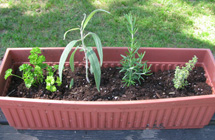
Herbs For Winter Windowsill

Growing season is over, do you still find yourself ready to dash out to the garden for some chives, basil or a sprig of thyme...

Claim FREE EBook

Once you subscribe you will get a confirmation email from agrinfobank about joining the mailing list.

Thursday, 27 December 2012

Healthy herbs nutrition facts

Healthy herbs have long held an important place in our wellness. Prized since ancient times, and today we even more depend on them to purify our body, mind, and soul!
healthy herbs
Of course, we all use herbal parts in our daily lives, one way or the other, whether for their fragrance, for their healing power, or in lovely recipes.
Herbal benefits are many; be it for spiritual reasons or to spice up your taste buds, or as a home remedy for your sore throat... herbs are handy for every need! Although, the herbs been in use in our diet since antiquity, only recently have taken the center-stage of nutrition scientific world for their potential health benefiting and detoxification properties.


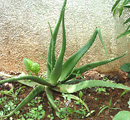
aloe-vera plant

Why herbs in our diet...? Health benefits of herbs
  • mediterranian basilHerbs contain unique anti-oxidants, essential oils, vitamins, phyto-sterols and many other plants derived nutrient substances, which help equip our body to fight against germs, toxins and to boost immunity level. Herbs are, in fact, medicines in smaller dosages.
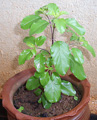
  • Essential oils in herbs have been found to have anti-inflammatory function by inhibiting the enzyme cyclooxygenase(COX), which mediates inflammatory cascade reactions in the body. The enzyme-inhibiting effect of essential oils in herbs makes it an important remedy for symptomatic relief in individuals with inflammatory health problems such as rheumatoid arthritis, osteo-arthritis and inflammatory bowel conditions like ulcerative colitis.
  • Many unique compounds in the herbs have been found to reduce blood sugar levels in diabetics.
  • Controlled-epidemiological studies have shown that certain compounds in garlic like those that thiosulfinates (allicin) can bring significant reduction in total cholesterol and in blood pressure and thereby helps prevent coronary artery disease and stroke risk.
  • Curcumin, together with other antioxidants in the turmeric, has been found to have anti-amyloid and anti-inflammatory properties. Thus, it is thought to be effective in preventing or at-least delaying the onset of Alzheimer’s disease.
  • The volatile oils, vitamins, and antioxidants in the herbs have cytotoxicity action against prostate, pancreatic, colon, endometrial etc., cancer cells.
  • The chemical compounds in the herbs have been found to be anti-spasmodic, carminative, diaphoretic, analgesic, aphrodisiac, deodorant, digestive, antiseptic, lipolytic (fat and weight loss action), stimulant and stomachic actions when taken in appropriate dosage.

Here is the complete list of healthy herbs with their
health benefits, nutrition value, culinary and medicinal uses:

basil
Basil herb
borage
Borage
burdock root
Burdock root
celery
Celery
chives
Chives
cilantro
Cilantro (coriander)
dandelion
Dandelion
dill
Dill weed
epazote
Epazote
garlic
Garlic
ginger
Ginger
lemongrass

Lemongrass
oregano herb
Oregano
parsley
Parsley
peppermint
Peppermint
rosemary
Rosemary herb
garden sage or common sage
Sage
summer savory
Savory
spearmint-herb
Spearmint
stevia rebaudiana plant
Stevia
sweet-marjoram
Sweet marjoram
tarragon
Tarragon
thyme
Thyme herb
turmeric
Turmeric

Culinary herbs

Herbs are a great addition to food, not just because, they add special flavor and spicy taste to our food, but also they contain many anti-microbial substances that help keep our food protected from these agents. Healthy herbs are used in small amounts while preparing recipes; actually, they provide flavor rather than substance to food.

Here are some serving tips:
  • Fresh leaves are being used in the preparation of soups and herbal sauces.
  • Chopped, fresh herb leaves can impart richness to vegetable as well as fruit salads.
  • Along with other spicy items, selective healthy herbs are being used to enhance the flavor and taste of vegetable, chicken, fish and lean meat dishes.
  • Some herbal leaves and plant parts are increasingly been used as popular flavor drinks.

Persimmon fruit nutrition facts

Sweet, delicious persimmon fruits are rich in health promoting nutrients such as vitamins, minerals, and anti-oxidants that are vital for optimum health. Botanically, the fruit belongs to the family of Ebenaceaeof the genus: Diospyros. Scientific name: Diospyros virginiana.
This delicate oriental fruit is native to China. It spread to Japan very long ago and later was introduced to California during the middle of nineteenth century.


persimmonpersimmon fruit slices
Persimmon tree with fruit.
(Diospyros virginiana)
Photo: byTakekaju)
Delicious Persimmon slices.


Persimmon is a multi-trunked or single-stemmed deciduous tree, which grows up to 25 ft. in height. They grow best in areas that have moderate winters and relatively mild summers.
Persimmon trees classified broadly into two general categories: those that bear "astringent fruit" (whilst unripe) and those that bear "non-astringent" fruits. An astringent cultivar, which is commonly cultivated in Japan known as “Hachiya,” is high in tanninsand must be allowed to ripen fully until it attains jelly-soft consistency before fit to eat. A non-astringent persimmon, on the other hand, contains less tannin and can be eaten while it is crispy as in apples. Astringency can be removed by treating the fruit with carbon dioxide or alcohol.
During each season, the tree bears numerous fruits that vary by cultivar from spherical to heart to flatten or squash in shape. They also greatly vary in size from as little as a few ounces to more than a pound. The color of the fruit varies from light yellow-orange to dark orange-red. The entire fruit is edible except for the seed and calyx.

perimmons fruits
Astringent persimmons.

Astringent varieties: Eureka, Hachiya, Saijo, Tamopan, Tanenashi, Triumph, etc.
Non-astringent varieties: Fuyu (Fuyugaki), Gosho/Giant Fuyu/O'Gosho, Imoto, Izu, Jiro, Maekawajiro, Okugosho, Suruga, etc.


Health benefits of persimmon fruit

The fruit is low in calories (provides 70 calories/100g) and fats but is rich source of dietary fiber.
  • Persimmons contain health benefiting phyto-nutrients flavonoid poly-phenolic anti-oxidants likecatechinsand gallocatechinsas well as important anti-tumor compoundbetulinic acid. Catechins are known to have anti-infective, anti-inflammatory and anti-hemorrhagic (prevents bleeding from small blood vessels) properties.
  • Fresh persimmons contain anti-oxidant compounds like vitamin-A, beta-carotene, lycopene, lutein, zea-xanthin and cryptoxanthin. Together, these compounds functions as protective scavengers against oxygen-derived free radicals and reactive oxygen species (ROS) that play a role in aging and various disease processes.
  • Zea-xanthin, an important dietary carotenoid, selectively absorbed into the retinal macula lutea in the eyes where it is thought to provide antioxidant and protective light-filtering functions; thus, helps prevent "Age-related macular related macular disease"(ARMD) in the elderly.
  • They are also a very good source of vitamin-C, another powerful antioxidant (especially native Chinese and American persimmons; provide 80% of DRI). Regular consumption of foods rich in vitamin C helps the body develop resistance against infectious agents and scavenge harmful, pro-inflammatory free radicals.
  • The fruit is good in many valuable B-complex vitamins such as folic acid, pyridoxine (vitamin B-6), thiamin...etc. These vitamins act as co-factors for numerous metabolic enzymatic functions in the body.
  • Fresh Persimmon fruits also contain healthy amounts of minerals like potassium, manganese (15% of DRI), copper (12% of DRI), and phosphorus. Manganese is a co-factor for the enzyme, superoxide dismutase, which is a very powerful free radical scavenger. Copper is a co-factor for many vital enzymes, includingcytochrome c-oxidase and superoxide dismutase (other minerals function as cofactors for this enzyme are manganese, and zinc). Copper is also required for the production of red blood cells.
  • Persimmon fruit (Diospyros virginiana),
    Japanese, fresh,
    Nutrition Value per 100 g
    (Source: USDA National Nutrient data base)
    PrincipleNutrient ValuePercentage of RDA
    Energy70 Kcal3.5%
    Carbohydrates18.59 g14%
    Protein0.58 g1%
    TotalFat0.19g1%
    Cholesterol0 g0%
    Dietary Fiber3.6 g9.5%
    Vitamins
    Choline7.6 mg1.5%
    Folates8 µg2%
    Niacin0.100 mg1%
    Pyridoxine0.100 mg7.5%
    Riboflavin0.020 mg1.5%
    Thiamin0.030 mg2.5%
    Vitamin C7.5 mg12.5%
    Vitamin A81 IU3%
    Vitamin E0.73 mg5%
    Vitamin K2.6 µg2%
    Electrolytes
    Sodium1 mg0%
    Potassium161 mg2.5%
    Minerals
    Calcium8 mg0.8%
    Copper0.113 mg12.5%
    Iron0.15 mg2%
    Magnesium9 mg2%
    Manganese0.355 mg15%
    Phosphorus17 mg4.5%
    Zinc0.11 mg1%
    Phyto-nutrients
    Carotene-α0 µg--
    Carotene-β253 µg--
    Crypto-xanthin-β1447 µg--
    Lutein-zeaxanthin834 µg--
    Lycopene159 µg--

    Selection and storage

    Astringent variety persimmon fruits generally harvested when they are hard but fully matured. Non-astringent persimmons are ready for harvesting when they reach full-colored, and slightly soft in consistency. Astringent persimmons usually continue to ripen at room temperature. Both kinds of persimmons should be plucked from the tree using hand-held pruning shears (as in mango), leaving the calyx intact, unless the fruit is to be used for drying while taking care not to bruise.
    In the stores, select fresh fruits featuring bright yellow-orange color without any surface bruises or cuts on them. "Dried persimmons" are also available readily in the supermarkets and feature many similarities with dried-apricots.
    Mature, hard astringent persimmons can be stored in the refrigerator for several months. Non-astringent varieties have short shelf life and can be stored for only a few days at room temperature.


    Preparation and serving methods

    Persimmons can be eaten fresh, dried, or cooked. Raw fruits can be cut into quarters or eaten wholesome like an apple. Their flavor ranges from a firm to mushy and is very sweet.
    Here are some serving tips:
    • Dried persimmon fruits can be used in cookies, cakes, puddings, salads and as a topping for breakfast cereal.
    • Persimmon fruit pudding is a popular dessert which uses fresh fruits.
    • Dried fruits are also used as snacks or used in desserts. They are used widely to make the traditional Korean spicy recipe, sujeonggwa,while the matured, fermented fruit is used to make persimmon vinegar called "gamsikcho" 
    •  
  • Health benefits of Persimmon (Japani Phal)


    By Mohammed Rashid, Qarshi industries Pakistan
    Diospyros kaki is the botanical name of Persimmon or Japani Phal. Diospyros comes from the ancient Greek words, this means more or less "divine fruit", though its literal meaning is more like "Wheat of Zeus".
    This species, native to China, is deciduous, with broad, stiff leaves. Cultivation of the fruit extended to East Asia, California, Europe and Brazil.
    Its trees have been classified broadly into two general categories: those that bear "astringent fruit" (whilst unripe) and those that bear "non-astringent" fruits. An astringent cultivar, which is commonly cultivated in Japan known as “Hachiya,” is high in tannins and must be allowed to ripen fully until it attains jelly-soft consistency before fit to eat. A non-astringent persimmon, on the other hand, contains less tannin and can be eaten while it is crispy as in apples. Astringency can be removed by treating the fruit with carbon dioxide or alcohol.
    Health benefits:
    1. They are also a very good source of vitamin-C. Regular consumption of foods rich in vitamin C helps the body develop resistance against infectious agents and scavenge harmful, pro-inflammatory free radicals.
    2. The fruit is good in many valuable B-complex vitamins such as folic acid, pyridoxine (vitamin B-6), thiamin...etc. These vitamins act as co-factors for numerous metabolic enzymatic functions in the body.

    3. Persimmons are replete with many phyto-nutrients flavonoid poly-phenolic anti-oxidants. Catechins and gallocatechins as well as important anti-tumor compound betulinic acid contained in this fruit is said to be highly beneficial for health. Catechins are known to have anti-infective, anti-inflammatory and anti-hemorrhagic properties.
    4. Fresh persimmon fruits contain healthy amounts of minerals like potassium, manganese, copper and phosphorus. These minerals are believed to be powerful free radical scavengers and boost the production of blood cells.
    References:

    Intensive Farming With a Climate-Friendly Touch: Farming/Woodland Mix Increases Yields

    In the world of agriculture, climate protection and intensive farming are generally assumed to be a contradiction in terms. At Technische Universität München (TUM), however, scientists have come up with a new land development concept that could change this view. The new model is tailored to medium-sized farms in South America and sees farmers transitioning from large-scale monoculture to more diverse crop mixtures spread over smaller plots interspersed with wooded areas -- a switch that can bring significant financial benefits.
     
    Intensive Farming With a Climate-Friendly Touch: Farming/Woodland Mix Increases Yields
    Each year, huge carbon stores are lost as a result of deforestation. In South America, around four million hectares of forest are cut down every year. As a result, international climate protection programs are planning to financially compensate farmers who preserve forests or plant new trees. Demand for land is rising, however. And growing need for food and energy crops will inevitably lead to conflicts of interest over fertile land in countries such as Brazil and Ecuador.
    Thomas Knoke and Michael Weber at Technische Universität München (TUM) firmly believe that intensive, high-yield agricultural practices can go hand-in-hand with climate and environmental protection. The two scientists and their colleagues have developed a "diversified land-use" concept for medium-sized holdings in South America based on an idea originally developed by retired TUM professor, Wolfgang Haber. The new concept encourages farmers to move away from large-scale monocropping and plant a mix of field crops on smaller plots, while at the same time setting aside part of their land for forests and hedges. Any unused land will be reforested. The smaller plots of farmland will still be large enough for intensive farming practices using fertilizers, planting machines and harvesters. The interspersed wooded areas and hedges will protect the soil from erosion and serve as long-term carbon stores.
    Knoke and Weber have evaluated the economic viability of their concept based on a typical medium-sized agricultural holding. This model hacienda comprises an area of over 116 hectares and includes croplands, wooded areas and unused land. There are around five million family-owned farms of this size on the South American continent.
    Adopting this sustainable method of intensive farming initially means higher costs for farmers due to reforestation and the division of land into individual plots. However, the combination of woodland management and smaller plots of land pays off in the long term. Working lots of individual plots enables farmers to diversify and spread risk -- in much the same way as smart investors. By growing a broader portfolio of crops such as soya, sugar cane, corn and coffee, they can reduce their dependency on price fluctuations. The wooded areas also provide extra income. Smaller material from forest thinning can be used as firewood, while larger logs can be sold as building material. Depending on the crops harvested, a farm modeled on the diversified land-use method will achieve higher returns than a monocrop farm in eight years at the latest. Farmers working this new model can achieve between 19 and 25 percent more yield than they would with large-scale monoculture.
    To ease the transition to diversified land development, Knoke and Weber are lobbying for start-up funding and knowledge sharing. "The associated costs, however, are the same or less than comparable measures aimed at reducing CO2 levels," explains Professor Knoke from the TUM's Institute of Forest Management. "Which makes diversified land development in line with local dynamics an effective approach to ensuring highly productive yet climate-friendly agriculture."
    Published on: 11/08/2012

    Potato prodution in Pakistan; A Review Article

    Pakistan is blessed with four seasons, having ideal environmental conditions for diversified agriculture production systems. Total geographical area of Pakistan is 79.6 million hectares ranging from great Himalayas to fertile Indus basin and deserted areas in Sindh and Baluchistan. Presently out of this total area, only 24.6 million hectares is under cultivation including 4.2 million hectares covered with forests. Remaining area accounts for deserted, mountainous and barren lands. Area classified as irrigated is about 18 million hectares while 6.6 million hectares is subjected to natural arid environmental conditions, completely depending upon natural precipitation to meet the crop irrigation requirements.
    Agriculture sector plays the role of backbone for the country pertaining to its socio-economic matters. Contribution of this sector to National Gross Domestic Production is 21.62% and involves about 44.7% of the total employment of the country. There is no blinking the fact that agriculture is the sector which has great potential to be explored for amelioration of economically strained circumstances, in which our country is entangled. Substantial growth of agriculture sector will not only tackle the menace of food security but will also resolve the severe issue of unemployment to great extent. Agronomic as well as horticultural crops are of great importance for feeding the 200 million people of the country. Major horticultural produce of the country are vegetable and fruit crops. Among the vegetables potato ranks higher position regarding area under cultivation and total yield.
    Globally potato is fourth largest food crop after rice, wheat and maize. China is the top country on global scale for potato production where 74.79 million tonnes were harvested in 2010. India produced 36.57 million tonnes of potato in 2010. In 2010-2011 potato was cultivated over an area of 159.4 thousand hectares (0.159 million hectares) and 3726.5 thousand tonnes (3.73 million tonnes) of potato were harvested in Pakistan. Surplus potato produced locally is exported to Dubai, Malaysia, Sri Lanka, Indonesia, Singapore and Iran. In 2009-2010, 245.329 million kg potato was exported to above mentioned countries and about Rs. 15 Billion export revenue is generated by potato yearly. Russia is another big market where demand of Pakistani potato is on rise.

    Domestication of potato is reported to be between 8000 BC-5000 BC in the regions of modern Peru and Bolivia. Present cultivated species of potato (Solanum tuberosum) is considered to be originated from Solanum brevicaule found in Peru. International Potato Center (Peru) holds the position of ISO-Accredited Collection Authority for potato germplasm. Potato plants are herbaceous perennials and require 25 0C temperature for germination, 20 0C for vegetative and 16-19°C for tuber formation. It is an entomophilic cross pollinated crop. Protein and energy production of potato crop is 1.4 kg/ha/day and 216 MJ/ha/day, respectively while for wheat crop protein production is 1.3 kg/ha/day and energy production is 135 MJ/ha/day. These figures make potato superior to wheat crop.
    Freshly harvested potato tubers contain about 79% moisture contents and 21% dry matter. Of total dry matter about 60-80% is starch in the form of amylose and amylopectin. Its nutritional value can be revealed by the presence of vitamins (B1, B2 and B6), minerals (potassium, phosphorus and magnesium), falate, pantothenic acid and riboflavin. In addition to this research activities explored its medicinal value. Presence of soluble and insoluble fibers help in preventing constipation, protect from colon cancer and decrease absorption of dietary cholesterol which leads to lower plasma LDL cholesterol. Recent studies suggest that flavonoids, antioxidants and querceton present in potato tubers have anticancer and cardio-protective properties and also protect our human body from infectious agents and scavenge harmful, pro-inflammatory free radicals.
    Starch from potato tubers is extensively used in paper, wood, textile and pharmaceutical industry where it is used as binder, texture, adhesive and filler agent. Oil drilling firms make use of potato starch for washing the boreholes. Tubers may contain toxic alkaloids as solanine and chaconine. Formation of solanine in tubers is indicated by greenish discoloration with sprouts on potato skin.

    In our country potato cultivation is categorized in three growing seasons as spring, summer and autumn crop with different geographical locations. In spring season it is grown in plains and lower hills of Balochistan and KPK province in January-February with harvesting in April-May. Summer crop is sown in northern hilly areas and Azad Jammu and Kashmir in March-May with harvesting in August-September. Autumn sowing is done in plains and
    southern Punjab, Sindh and plains of Balochistan in September-October and harvesting is done January-February. In total annual production, share of spring, summer and autumn crop is 7-10%, 15-20% and 70-75% respectively. For total area under cultivation for potato, share of Punjab is 83%, Sindh is 1%, KPK is 10% and Baluchistan is 6%. Punjab has highest share for production and area which is contributed by autumn and spring crop. Major potato producing districts in Punjab are Okara, Sahiwal, kasur, Sialkot, Sheikhupura, Narowal, Lahore, Pakpattan, Jhang, Tobe Tek Singh and Gujranwala, in KPK are Nowshera, Dir and Mansehra, in Baluchistan are Pishin, Kila Saaifulla and Kalat. Although, Pakistan is a large potato producing country yet per hectare yield is only 19.34 tonnes which is about 45.66 tones lower than that of developed countries as USA and Holland where average per hectare yield is 65 and 45.5 tonnes respectively.
    About 5000 varieties of potato exist worldwide. In Pakistan both white and red skin varieties are cultivated but red skinned are mostly liked by consumers. Red skin varieties include desiree, asterix, lady roseta, krouda, rodeo, cardinal, ultimas, lal-e-faisal, and simphonia while diamant, santana, ajax, patrones, multa and sante are white skin varieties being cultivated commercially.

    Sowing of virus contaminated uncertified seed, imbalanced use of NPK fertilizers, low level use of potassium, occurrence of copious diseases and insect pests are factors responsible for low yield. More than 18 potato diseases have been reported in Pakistan and 13 of which are of common occurrence including early blight, late blight, powdery mildew, common scab, stem rot, soft rot, and wilt caused by Alternaria solani, Phytophthora infestans, Erysiphe cichoracearum, Streptomyces scabies, Erwinia carotovora spp. carotovora, Fussarium spp and Verticillium dahlia, respectively. Potato viruses damaging the crop above threshhold level include potato virus X, potato virus Y, potato leaf roll virus and potato mop top virus. Major insect pests attacking crop include green peach aphids (Myzus persicae), cutworms (Agrotis spp.), colorado potato beetle, white grubs (Phyllorphaga spp.), wire worms (Elateridae spp.), potato leaf hoppers (Empoasca Fabae) and field cricket (Gryllus bimaculatus). Besides that potato cyst nematode (Heterodera rostochiensis) and root knot nematodes (Meloidogyne incognita) hamper root and tuber formation.
    Seed involves about 35-40% of total cost of production so virus free seed gains attention. White fly is the major vector of potato viral diseases. Although, certified seed production in country is limited due to lack of technical, economical and managerial skills and is unable to meet total seed requirement, yet Punjab Seed Corporation is a milestone from public research sector which started sale of virus free seed by using modern tissue culture technology. Limited quantities of caroda, santee, burna, easterx, desiree, cardinal and diamente produced by tissue culture are supplied to farmers. Major importers and distributers of potato seed are PEPSICO, AGRICO and Bari Seeds. National public sector organizations working in potato seed production are Agricultural Biotechnology NARC Islamabad, Plant Virology AARI Faisalabad, Hazara Agriculture Research Station Abbottabad, Potato Seed Unit Deptt. of Agri. Gilgit and Punjab Seed Corporation Sahiwal. While Syko International Company Lahore, Bari traders Lahore, Okara Potato, Vegetable & Fruit Growers Co-operative Society, Bhatti Brothers Lahore, Hammad & Company Sahiwal, Haji Sons Lahore, Stamex International Lahore, AGB Seed Company Lahore, Trade Channels Lahore and Punjab Agri. Farms Lahore are private sector organizations working in potato seed production locally.

    Biotechnological tools are also in application for developing genetically modified potato varieties. By the application of genetic engineering techniques Rpi-Vnt1.1 gene from Solanum venturrii has been introduced in commercial variety “Desiree” as this gene confers resistance to Phytophthora infestans (late blight).
    In conclusion, by following crop advisory recommendations for sowing time, plant population, balanced use of fertilizers, increased use of potassium, integrated disease and insect pests management, we will not only step forward to sustainable agriculture but will also reap economic benefit by increasing per acre yield to fetch foreign exchange by exporting the surplus produce.
    *Pictures source: Google
    About author: Qamar Shahzad Anjum is a PhD scholar at Institute of Horticultural Sciences, University of Agriculture Faisalabad Pakistan. Email: qamar2005.uaf@gmail.com

    Garden Talk: A New Leaf in Your Home Garden

    By Zahrah Nasir
    Q: I recently relocated to Islamabad from Karachi and wish to grow vegetables in my garden. Is this the right time? If so, please recommend three or four easy to grow ones and how to go about their cultivation.
    A: Yes this is the perfect time to put in some vegetable seeds. At this time of the year it is best to grow your vegetables in a sunny position. You could start out with peas, carrots, spinach and lettuce which are all reasonably simple to grow. Peas, spinach and lettuce all do well in soil that has had lots of old, well-rotted, organic manure worked into it, whilst lettuce requires the same but with some river sand added to ensure good drainage.

    Picture Source: Google
    Peas should be sown half an inch deep and an inch apart to obtain strong plants and they will need supports, such as trellis-work or canes to climb up. Spinach and lettuce seeds should be sown, very thinly, about quarter of an inch deep, in rows four to five inches apart and lettuce seeds, these are very fine, thinly just under the soil surface, in rows six to 10 inches apart. Carrot seed, once again the seed is very small, is best sown thinly, just under the soil surface, in rows no more than six inches apart. All should be kept weed-free and watered regularly.
    Q: I would appreciate your comments on my quick organic fertiliser recipe: One cup mustard/cotton oil cake powder. Half cup dry alfa powder. Half cup wood and paper ash. Half cup wood powder. Four or five powdered egg shells. Three to four rusty iron nails. Use 50/50 with soil.
    A: Firstly I do not personally recommend the use of either mustard or cotton oil seed cake in the garden. Much better to use ‘bagass’ which is residual organic material from sugar mills. I am puzzled by ‘alfa powder’ unless you mean dried, ground up alfalfa which is fine. The wood/paper ash is good, as are the powdered egg shells; iron nails are good too if they are small ones and if you take care to bury them deeply in order to avoid accidents.
    By ‘wood powder’, I presume that you mean sawdust. Fresh sawdust heats up as it rots down and will burn your plants and their tender roots. It should first be composted down and, only then used in the garden. It would be interesting to know how your plants have reacted to your fertiliser as detailed. Experimentation is great, please keep it up and growing organic is the best way to proceed.
    Q: I have been nurturing an ivy creeper which finally developed roots and climbed the criss-cross wooden frame alongside my bay window. Over a period of five years the plant covered the whole structure and looked beautiful. Unfortunately, all of a sudden the leaves started yellowing and falling, leaving a large area bare. I thought that the tube well water — laboratory analysis says it is unfit for human consumption — could be the cause so I switched to normal sweet water praying that would help. The plant does appear to be developing new leaf buds but I am really worried about what to do.
    A: Your ivy sounds gorgeous and you are commended for getting it to do so well. It is good that you stopped giving your ivy the tube well water as it sounds as if this was the problem.
    The fact that, after switching over to sweet water, the ivy shows signs of growth is very encouraging and I think that patience should be exercised now. The plant should re-grow in time.
    Q: I have a problem with my fig tree in Islamabad. The leaves are yellowing and falling. What should I do?
    A: This tends to happen during periods of high summer humidity or rain and is absolutely nothing to worry about at all.
    Q: I am trying to grow bananas and pomegranates but neither bear fruit. The leaves of both get so badly damaged by strong winds that they die. I recently added organic fertiliser to the soil and I water regularly. How can I improve their condition please?
    A: Cultivating bananas and pomegranates in a windswept location is asking for trouble. The only solution to the problem is to erect wind protection, the type depending on the size of your garden.
    Q: Is avocado a remedy for arthritis? Is it possible to purchase the plants in Karachi or do I need to look elsewhere?
    A: Eating avocadoes will not cure arthritis but a poultice made from the bark and leaves is, it has been claimed, helpful in the treatment of rheumatism. I do not know if avocado saplings are now stocked in Karachi nurseries but I doubt it. Avocadoes grow into huge trees and both male and female are required for them to fruit. The climate of Karachi is not really suitable for their cultivation.
    Source: The Dawn, InpaperMagzine
    Published on: 10/15/2012

    Wednesday, 26 December 2012

    What Is Permaculture?

    What is permaculture? How does permaculture work? If I had a dollar for every time I answered that question I'd be a very happy permaculturist indeed...
    To be honest, to me permaculture is mainly a way to have an organic food garden that's stunningly beautiful, productive, and comes without any tedious garden work...
    "Permaculture has, in many people's minds, come to represent a sustainable, organic, home vegetable garden." (Rosemary Morrow)
    ...but that is only one aspect of permaculture. Of course there is a lot more to it.
    There are some official explanations and definitions that answer the question "What Is Permaculture?", but in my experience they still leave people confused. I'll try to explain it a bit more.
    I'll start with the history and the official explanations, then I'll translate it into something that makes sense to the average home gardener and suburbanite.
    After that intro you best follow the links at the bottom, which will take you to some specific examples. That should make some light bulbs come on and everything should fall into place.
    "You can fix all the world's problems, in a garden. You can solve them all in a garden. You can solve all your pollution problems, and all your supply line needs in a garden. And most people today actually don't know that, and that makes most people very insecure." (Geoff Lawton)

    What Is Permaculture? - Definitions

    The term permaculture combines the words permanent and culture, or permanent and agriculture, and that is the first hint to what it's all about.
    The philosophy behind permaculture was developed about thirty years ago in Australia by Bill Mollison and David Holmgren.
    During his many years as a wildlife biologist Bill Mollison had witnessed first hand the destruction that humans are causing in natural systems, but he also had a chance to observe how these natural ecosystems work and what keeps them in balance.
    Permaculture design is a result of these observations.
    Bill Mollison and his then student David Holmgren first published their ideas in 1978, in a book called Permaculture One, introducing a "design system for creating sustainable human environments", based on close observation of natural systems.
    In a later book, Introduction to Permaculture, Bill Mollison writes:
    "The aim is to create systems that are ecologically-sound and economically viable, which provide for their own needs, do not exploit or pollute, and are therefore sustainable in the long term."
    "Permaculture uses the inherent qualities of plants and animals combined with the natural characteristics of landscapes and structures to produce a life-supporting system for city and country, using the smallest practical area."
    Now that's a mouthful. What the heck does it mean?

    What is Permaculture? - Let me try to explain...

    What Bill Mollison describes in his books is a totally integrated design system that's modelled on nature. If you design your garden or farm like a natural system you can save yourself a lot of work, save energy, and eliminate waste.
    Think about it, nobody digs and sows, plants and weeds, or sprays bugs in a forest. Still, all those chores are taken care of somehow. The forest grows and feeds its inhabitants, doesn't it?
    If any task in your garden is an unpleasant chore then there is definitely a better way to do it or to eliminate it. Learn from nature. Nature has already developed a solution to every problem that you could possibly encounter in your garden.
    Nature is also the ultimate recycler. Everything goes round and round. There is no such thing as "waste". Everything is a resource.
    And most importantly, it's sustainable. It's something that works in the long run, not something that is based on inputs that will eventually run out, not something that creates waste and problems that will eventually upset the system.
    Design is the keyword. It's all about how you place the design elements together. Look at how things work together in nature, and then try and mimic that design in your garden.
    You can find plenty of specific examples for this under Permaculture Design Principles, and once you grasped how it works it's easy to apply on a small scale.
    The beauty of it is that permaculture principles work everywhere, in every climate and on every scale. They can be applied to whole villages or housing estates (though it takes a deeper understanding and more planning to do that), or to a tiny backyard or balcony (which can be done very easily).
    If you think ahead and design your permaculture garden right, it won't take much effort, it will mostly look after itself, and it will also be incredibly productive and beautiful and attractive to wildlife.
    Permaculture is about "...saving the planet and living to be a hundred, while throwing very impressive dinner parties and organising other creatures to do most of the work." (Linda Woodrow)

    About us